IPTV vs OTT: What Are the Key Differences?
IPTV uses a private network. OTT streams over the public internet. Learn the key differences in quality, cost, and content delivery.
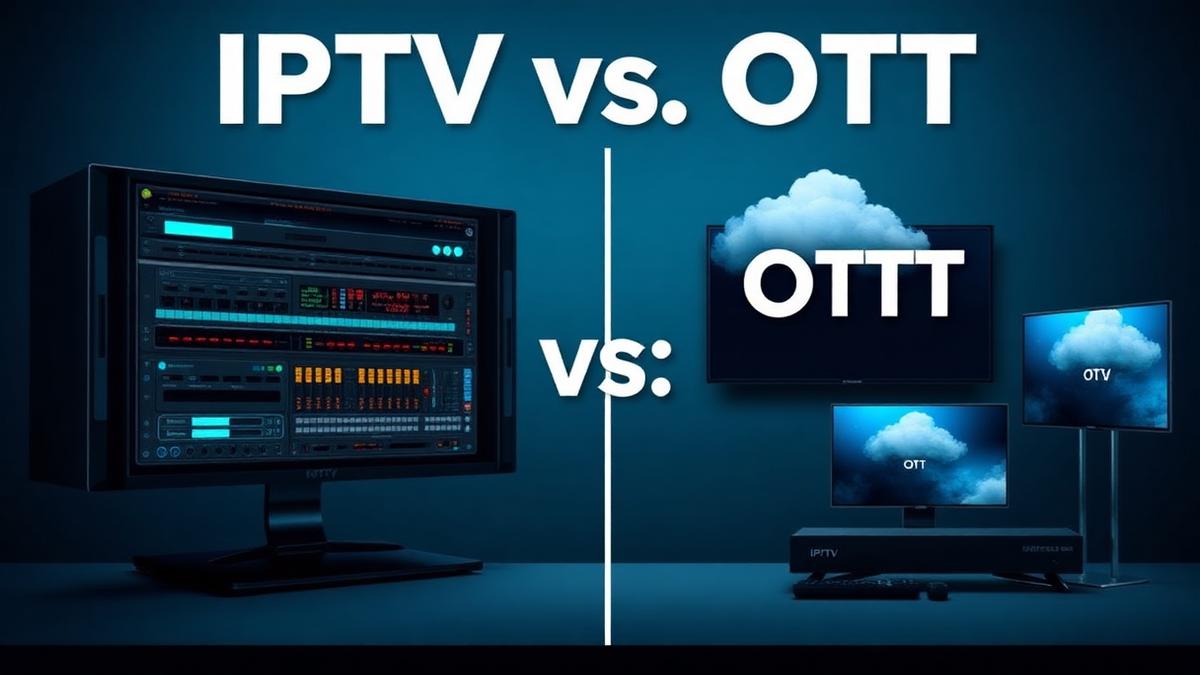
IPTV and OTT are two different ways to stream TV content over the internet. IPTV uses a private, managed network. OTT sends content over the open internet. Both deliver video to your screen, but they work in very different ways.
💡 Key Takeaways
- IPTV uses a dedicated network controlled by the provider.
- OTT streams over the public internet (like Netflix or YouTube).
- IPTV offers more stable quality. OTT offers more flexibility.
- Many modern services blend both IPTV and OTT features.
📌 Disclaimer
What Is IPTV?
IPTV (Internet Protocol Television) delivers TV channels through a private, managed network. The provider controls the entire delivery path. This gives users a more stable and consistent viewing experience.
Unlike regular internet streaming, IPTV content travels on a dedicated pipeline. The provider manages bandwidth, routing, and quality. This means fewer buffering issues during peak hours. Learn more in our complete IPTV guide.
How IPTV Delivers Content
- Dedicated network: Content moves on a private, managed path.
- Set-top box or app: Users need a specific player or device.
- Multicast delivery: One stream serves many viewers at once.
- QoS guaranteed: Providers control quality end-to-end.
IPTV is the technology behind many of the top-rated IPTV providers in 2026. These services often offer thousands of live channels with stable connections.
What Is OTT?
OTT (Over-The-Top) delivers video content over the open, public internet. It bypasses traditional cable or satellite infrastructure entirely. Services like Netflix, Hulu, and YouTube are all OTT platforms.
OTT does not require a special network. Any internet connection works. The trade-off is that quality depends on your local internet speed and congestion.
How OTT Delivers Content
- Public internet: Content travels over standard broadband connections.
- Any device: Works on phones, tablets, smart TVs, and browsers.
- Unicast delivery: Each viewer gets their own stream.
- Adaptive bitrate: Quality adjusts based on your internet speed.
OTT platforms are easy to access. You just need an internet connection and a compatible device. Many IPTV apps, like those covered in our best free IPTV players guide, also use OTT-style delivery.
Key Differences Between IPTV and OTT
The main difference is how content reaches your device. IPTV uses a closed, managed network. OTT uses the open internet. This affects quality, cost, and flexibility.
| Feature | IPTV | OTT |
|---|---|---|
Network Type | Private / Managed | Public Internet |
Quality Control | Provider-controlled | Depends on ISP |
Device Requirement | Set-top box or specific app | Any internet device |
Delivery Method | Multicast | Unicast (adaptive) |
Content Type | Live TV + VOD | Mostly on-demand |
Cost | $10–30/month | $7–20/month per service |
Buffering Risk | Low | Medium (depends on ISP) |
Channel Count | 10,000–40,000+ | Limited catalog |
✅ IPTV Advantages
- More stable streaming on dedicated networks
- Huge live channel selection (40,000+)
- Lower cost for massive content libraries
- EPG and catch-up TV features built in
- All PPV events included in subscription
✅ OTT Advantages
- Works on any device without special apps
- No long-term contracts required
- Major brands with polished interfaces
- Legal and licensed content guaranteed
- High-quality original programming
Content Delivery Methods
IPTV uses multicast delivery. OTT uses unicast (adaptive bitrate) delivery. This technical difference affects how efficiently content reaches viewers.
IPTV: Multicast Streaming
In multicast mode, one stream serves many viewers simultaneously. The provider sends a single copy of the channel. Network routers copy it to each viewer. This is very efficient for live TV.
- One stream serves thousands of viewers.
- Reduces bandwidth usage dramatically.
- Best for live broadcasts and sports.
- Requires managed network infrastructure.
OTT: Adaptive Bitrate Streaming
OTT sends a unique stream to each viewer. The stream adjusts quality in real time based on the viewer's internet speed. If your connection drops, the picture quality lowers. When it improves, quality goes back up.
- Each viewer gets a personalized stream.
- Quality adjusts automatically to bandwidth.
- Works on any internet connection.
- Uses more total bandwidth than multicast.
💡 Pro Tip
Streaming Quality Comparison
IPTV generally offers more consistent quality because the provider controls the network. OTT quality varies depending on your internet connection and the time of day.
Resolution Support
- IPTV: SD, HD, Full HD, and 4K supported. Quality stays consistent.
- OTT: Up to 4K HDR. Quality may drop during peak hours.
Buffering and Latency
- IPTV: Low buffering due to managed bandwidth. Best for live events.
- OTT: Buffering possible during network congestion. 10–30 second delay on live content.
If you want stable 4K streaming, IPTV is the better choice. Our IPTV vs cable comparison covers more quality details.
🔥 Speed Requirements
Which One Should You Choose?
The right choice depends on what you value most: stability or convenience. IPTV wins on channel count and quality. OTT wins on ease of access and original content.
Choose IPTV If You Want:
- Thousands of live TV channels from around the world.
- Stable 4K streaming without buffering.
- Sports, PPV events, and catch-up TV included.
- One subscription that covers everything.
Choose OTT If You Want:
- Premium original series and movies (Netflix, Disney+).
- Simple setup with no special equipment.
- Pay only for what you watch.
- Easy access from any device, anywhere.
Many users combine both. They use IPTV for live channels and sports, and OTT for on-demand movies and originals. Browse our best IPTV service providers to find a service that fits your needs.
💡 Best of Both Worlds
Frequently Asked Questions
Find the Right IPTV Provider
Our expert team has reviewed and ranked the top 20 IPTV services for 2026. Compare features, pricing, and performance to make an informed decision.
Independent reviews • Updated for 2026
Written by
IPTV Reviews Team
Our team of streaming experts is dedicated to helping you find the best IPTV solutions. With years of experience in the industry, we provide in-depth guides, reviews, and tutorials.
You Might Also Like
What is IPTV Service? Complete Guide 2026
Learn everything about IPTV services, how they work, and why they are the future of television streaming.
IPTV vs Cable TV: Which is Better in 2026?
A detailed comparison between IPTV services and traditional cable TV. Save money while getting more channels.
Best IPTV Service Providers (2026) — Top 20 Tested
Discover the top 20 IPTV providers in 2026. Compare features, pricing, and channels. Find the perfect streaming service for your needs. Updated reviews.